August 31, 2026|י"ח אלול ה' אלפים תשפ"ו Ki Savo 5786 - Breaking Free of the Samech
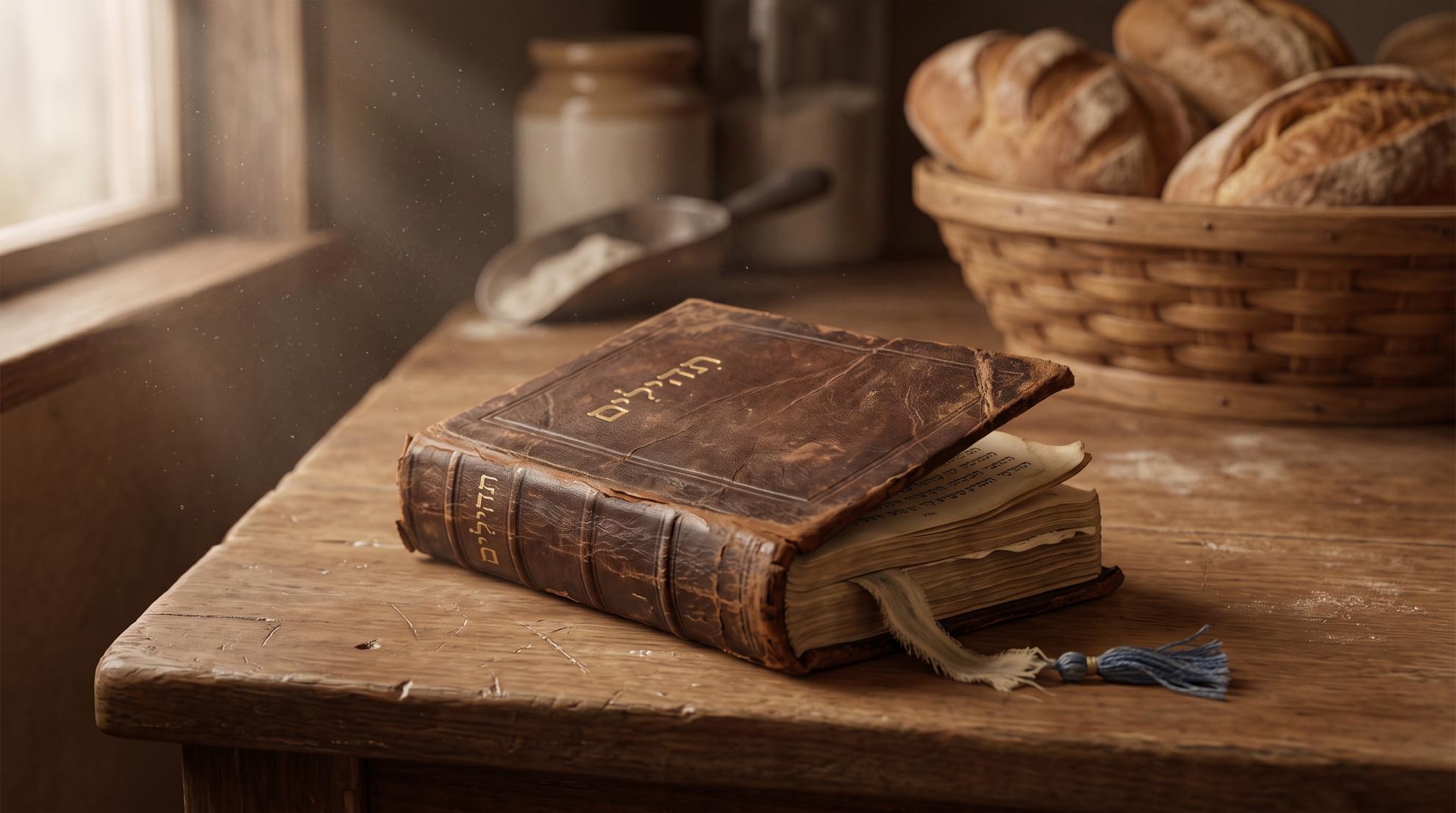
Print ArticleOur parsha opens with a mitzvah we know well, the mitzvah of Bikkurim — bringing your first fruits to the Beis HaMikdash.
Says the Torah:
(ב) וְלָקַחְתָּ מֵרֵאשִׁית כָּל פְּרִי הָאֲדָמָה אֲשֶׁר תָּבִיא מֵאַרְצְךָ אֲשֶׁר יְקֹוָק אֱלֹהֶיךָ נֹתֵן לָךְ וְשַׂמְתָּ בַטֶּנֶא וְהָלַכְתָּ אֶל הַמָּקוֹם אֲשֶׁר יִבְחַר יְקֹוָק אֱלֹהֶיךָ לְשַׁכֵּן שְׁמוֹ שָׁם:And you should bring from your first fruits and place them in a tene, a basket, and then bring them to the Beis HaMikdash.
The Baal HaTurim on this pasuk makes an interesting, even unusual, statement:
(ו) טנא. בגימטריא ס'. רמז לבכורים א' מס' (ירושלמי בכורים פ"ג ה"א)He writes that the word for basket, tene, is the gematria of 60.
Why? Because even though on a Torah level there is no exact amount a person is expected to bring for Bikkurim, midirabanan Chazal said one should give one-sixtieth of his produce as Bikkurim.
But then the Baal HaTurim continues:
ולכך נעלם סמ"ך בפרשת בכורים:And it is for this reason that if you look into the entire section of Bikkurim, there is one letter that is not found there: the letter Samech.
And, of course, this is confusing! You just told me the word tene, basket, is there to remind us of the letter Samech, yet the Torah is careful to exclude the Samech from this whole parsha? What is going on?
Rav Menachem Freeman, in his sefer Shaarei Derech, offers a beautiful answer.
He writes that there are two types of mindsets people have.
One is the approach that says if things happened a certain way yesterday, they will happen the same way today and the same way tomorrow. It's a philosophy that says the world is cyclical and simply continues as it always has. It can be soothing to believe this about the world, because if your life is good, it allows you to believe that since your life has been a certain way, it will just continue that way. Of course, if things aren't going well, it can be maddening to believe that the world is simply a merry-go-round and no one is in charge.
There is, however, a second approach - the Torah approach. That is that Hashem is what we call "HaMechadesh B'Tuvo B'Chol Yom Tamid Maaseh Breishis," that He is constantly recreating the world anew at every moment. No moment is the same as the moment before. It might look the same, but in actuality, at each moment the world is recreated. According to this approach, the world doesn't simply continue in a cyclical manner - it is linear, because there is a Creator who determines what happens each moment of every day.
And while this approach opens the door to more uncertainty, it also reminds us of two of the most important things a Jew must believe:
- There is a Ribono Shel Olam, a Master of the Universe, who is constantly involved with the world.
- Each one of us has the agency to bring about change in our lives. Just because our lives have been one way doesn't mean they have to continue that way.
The first approach — explains the Shaarei Derech — that the world just continues and must continue to be as it always has been, is represented by the letter Samech, which is, of course, a circle. The second approach, the one that reminds us that even if we have been a certain way our entire lives there is always the opportunity for change, is represented by the rejection of the Samech: the rejection of the notion that "I've always been this way, so I guess I'll stay that way forever."
And he adds that we find this idea hinted to in the creation of the very first human being. When Hashem created Adam and decided he needed a Chava, the Torah tells us that Hashem took one of his ribs:
(כא) [וַיַּפֵּל יְקֹוָק אֱלֹהִים תַּרְדֵּמָה עַל הָאָדָם וַיִּישָׁן וַיִּקַּח אַחַת מִצַּלְעֹתָיו] וַיִּסְגֹּר בָּשָׂר תַּחְתֶּנָּה:[Hashem cast a deep sleep upon the man, and he slept, and He took one of his ribs...] And He closed up the flesh in its place.
And then Hakadosh Baruch Hu closed him up after the surgery. Says the medrash that until that word "Vayisgor" ("and He closed"), there is no Samech in the Torah - but once the Samech was introduced, "Nivra Satan Imo," the Satan, the yetzer hara, was created alongside it.
And the question is: what does the Samech have to do with the Satan, the yetzer hara? But according to what we've said, it makes perfect sense. If the Samech represents the sense that "I am who I am, and there's no point trying to change," that is the very message of the Yetzer Hara.
And with all of this, we can return to our original question: what does the Baal HaTurim mean when he says that this is why there is no Samech in the entire parsha of Bikkurim?
Because what is Bikkurim?
(ב) וְלָקַחְתָּ מֵרֵאשִׁית כָּל פְּרִי הָאֲדָמָה
Bikkurim is all about beginning again. It's about approaching a new year and saying, "I don't take for granted that just because I had fruits last year, I will have them again this year." It's about recognizing that if Hakadosh Baruch Hu gave me what I need this year, it's a renewal - a new gift.
When I give that one-sixtieth of my produce, I am denouncing the idea of the Samech. The world isn't random; it is controlled by Hakadosh Baruch Hu.
And if that is true, it also means that my life isn't random — that my choices are actually my choices. Just because I have lived my life a certain way until now doesn't mean it has to continue that way. It means that just because I haven't been a shiur person, or a davening person, or a person who is careful about lashon hara or some other area of halacha, that doesn't mean I can't decide this year to make a change. It means I have the power to reject the message of the Samech, the message of the Yetzer Hara, and instead choose to make the change I may have been waiting on for a long time.
So often, as we get ready to approach Rosh Hashana and Yom HaKippurim and think about areas where we want to change, we get stuck. One of the main reasons we get stuck is because we worry: Who am I? I'm not the kind of person who does that mitzvah, or doesn't do that aveira. Am I such a tzadik? We get stuck in the power of the Samech — that voice inside that tells us if we haven't been this way until now, who are we to give it a shot?
And this week's parsha comes to remind us that this is completely wrong. Just as Hakadosh Baruch Hu renews the world every day, He calls upon us to tap into our incredible potential and to choose to be a little more than we were yesterday.
This is the power of Bikkurim: to remind us never to fall prey to the Samech, to never believe that "I am who I am," but rather to know that just as Hakadosh Baruch Hu recreates our world each and every day, so too we have the power- we have the ability - to take that next step and recreate ourselves too.
In his book Personality Isn't Permanent (pp. 124–125), Benjamin Hardy tells the story of a man named Ken Arlen. Ken took up heavy smoking in high school and carried the habit through college, to the point where he was convinced he couldn't have a cup of coffee or a beer without a cigarette in hand. He tried quitting roughly twenty times and always failed - smoking had become part of who he was. After college, Ken moved to a new city for a hospital job. On his very first day, a coworker offered him a cigarette in the break room, and to his own surprise Ken said, "No thanks. Don't smoke - never have, never will." That was over forty years ago, and he never smoked again. Stepping into a place where nobody knew him as "the smoker" let Ken declare a new identity instead of fighting his old one - and it's that new identity that stuck.
Related Posts Stay informed and connected with your community!